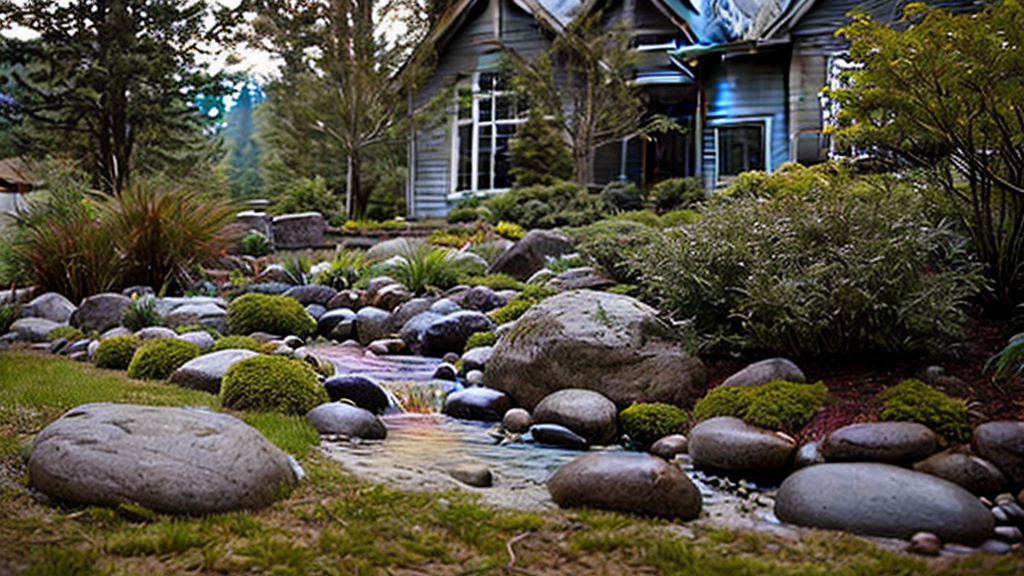
Wet ground is the normal condition for most of the year around Everett, and the houses that cope with it well are usually the ones where somebody thought about where the water goes. Between the long run of grey months and the clay-heavy glacial soils that sit under much of Snohomish County, rain that lands on a lot does not always drain away on its own. It pools. A French drain is one of the more common answers to that, and the first question almost everyone asks is what it will cost.
There is no single figure worth quoting, and anyone who offers one over the phone before seeing the property is guessing. What is useful is understanding what a contractor is actually pricing when they walk your yard, because that is what you end up comparing between bids.
Where the money goes
Most of a drainage bid is labour and disposal rather than parts. A crew has to open a trench, hold it at a consistent fall so water moves in one direction, bed perforated pipe in washed gravel, wrap the assembly in filter fabric so silt does not choke it, and haul away the spoil. Pipe and gravel are the cheap part. The digging, the hauling, and putting your yard back together are not.
Length and depth drive the number more than anything else. A short run catching one soggy corner is a different job from a line that wraps two sides of a foundation and carries water to the far end of the lot. Depth matters because a drain only works if it sits below the water it is meant to intercept, and every extra foot means more soil out and more shoring if the walls will not stand on their own.
Then there is the discharge point. Water has to end up somewhere legal and somewhere lower than where it started. A daylight outfall at the bottom of a slope is straightforward. Without one, the design may need a dry well, a sump and pump, or a connection that has to satisfy the city, and each of those adds parts and permitting time. Reading through how the trench actually goes in makes it easier to follow what a contractor is describing when they sketch the route on the back of an estimate.
Site conditions that move the price
Two houses on the same street can get very different quotes. The things that usually explain the gap:
- Soil. Dense clay is slow to dig and slow to drain, which can change both the labour and the design. Sandy or gravelly fill is quicker going.
- Slope. A natural grade gives the drain somewhere to send water. A flat lot means engineering the fall, and sometimes mechanical help.
- Access. If a mini excavator can reach the trench line, the job moves. If the only route is a narrow side yard between the house and a fence, much of it becomes hand work.
- What is already buried. Irrigation, gas, power, septic and mature tree roots all slow a dig down, and utility locates have to happen before anyone breaks ground.
- Restoration. Cutting through an established lawn, a paver patio or a driveway means putting that surface back, and hardscape repair can rival the drainage work itself.

Surface and subsurface systems also solve different problems, which is worth sorting out before comparing bids. A shallow drain that intercepts runoff before it reaches the house is a smaller job than a deep line meant to relieve pressure against a basement wall. If the real issue is roof and driveway water with nowhere to go, the approach to moving stormwater off the property may be simpler than the deep excavation you were braced for.
Comparing estimates without guessing
Get more than one bid, and insist each one puts the scope in writing: trench length and depth, pipe type and diameter, gravel and fabric spec, where the water discharges, who pulls permits, and exactly what surface restoration is included. A low number with none of that detail is not a better price, it is a smaller scope. Ask what happens if the crew hits rock, an unmarked line, or groundwater higher than expected, because that is where change orders come from.
It is also fair to ask how the contractor confirmed the problem. Someone who watched where water pools during a storm, or ran a hose test, is designing for your site. Someone quoting from the driveway is selling a standard trench.
When the trouble is inside, not outside
Exterior drainage and household plumbing get confused constantly, and the fix for one does nothing for the other. A French drain intercepts groundwater and surface runoff before it reaches your foundation. It has no effect on a fixture that backs up, a slow tub, or a sewer line that is root-bound. If the water showing up in your house is arriving through the drains rather than from the yard, that is a plumbing call, and everettdraincleaning.com/services/clogged-toilet-repair covers the indoor side of it.
Settle which problem you have before spending money on either. Standing water in the yard after a storm, a persistently damp crawl space, or seepage along the base of a basement wall all point outside. Gurgling fixtures, repeat clogs, or backups affecting several drains at once point to the plumbing. Drainage work done well tends to be invisible afterwards, which is exactly why it pays to be specific about what you are asking it to fix.